
History & Heritage
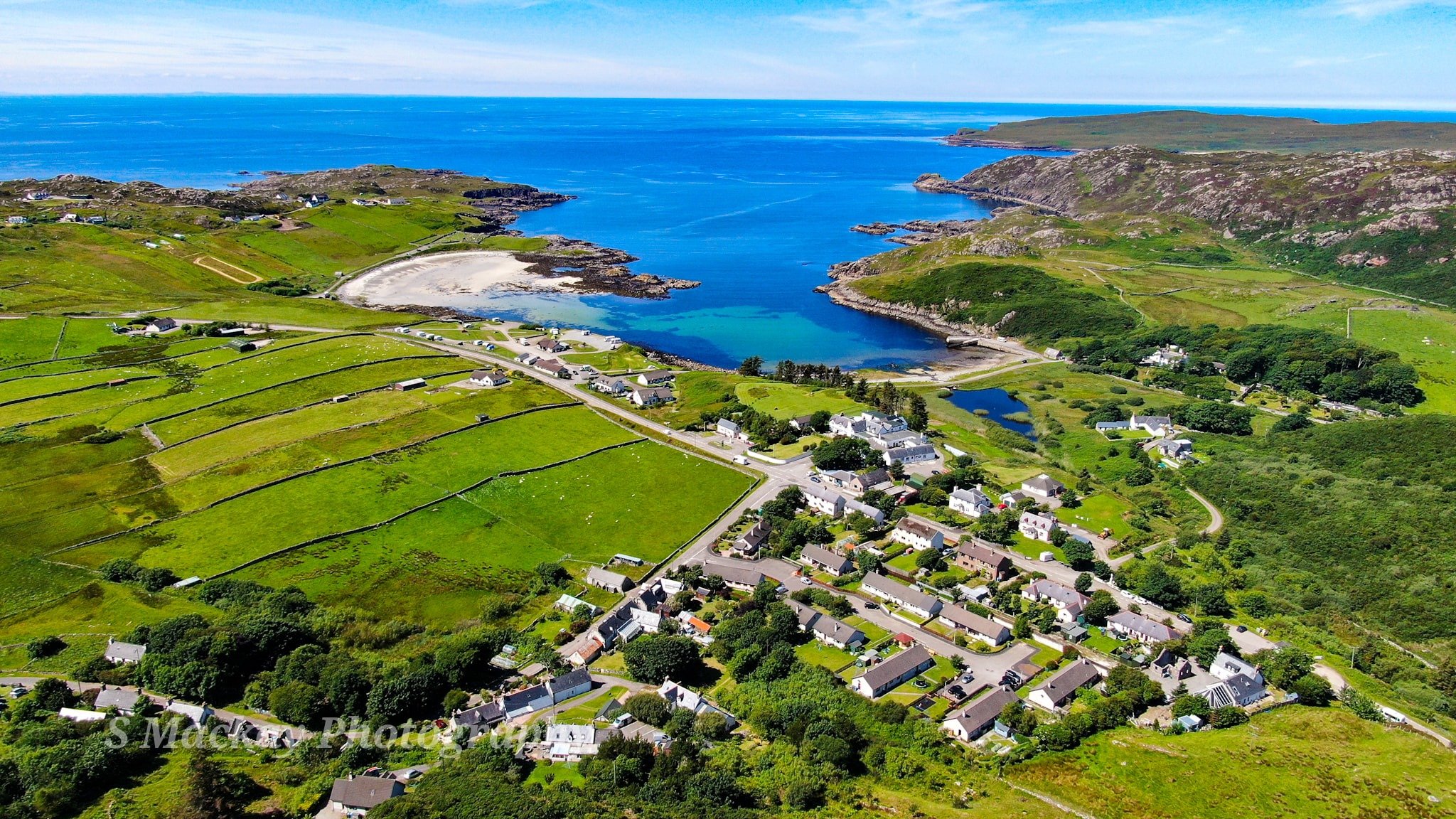
Scourie is a village shaped by its coastal location, crofting heritage, and long-standing connection to Clan Mackay. This section offers an overview of Scourie’s historical and cultural identity, as well as resources for those researching local ancestry or interested in the geological significance of the area.
A Brief History of Scourie
Scourie lies within the ancient parish of Eddrachilles and has long been a centre of crofting, fishing, and Highland tradition.
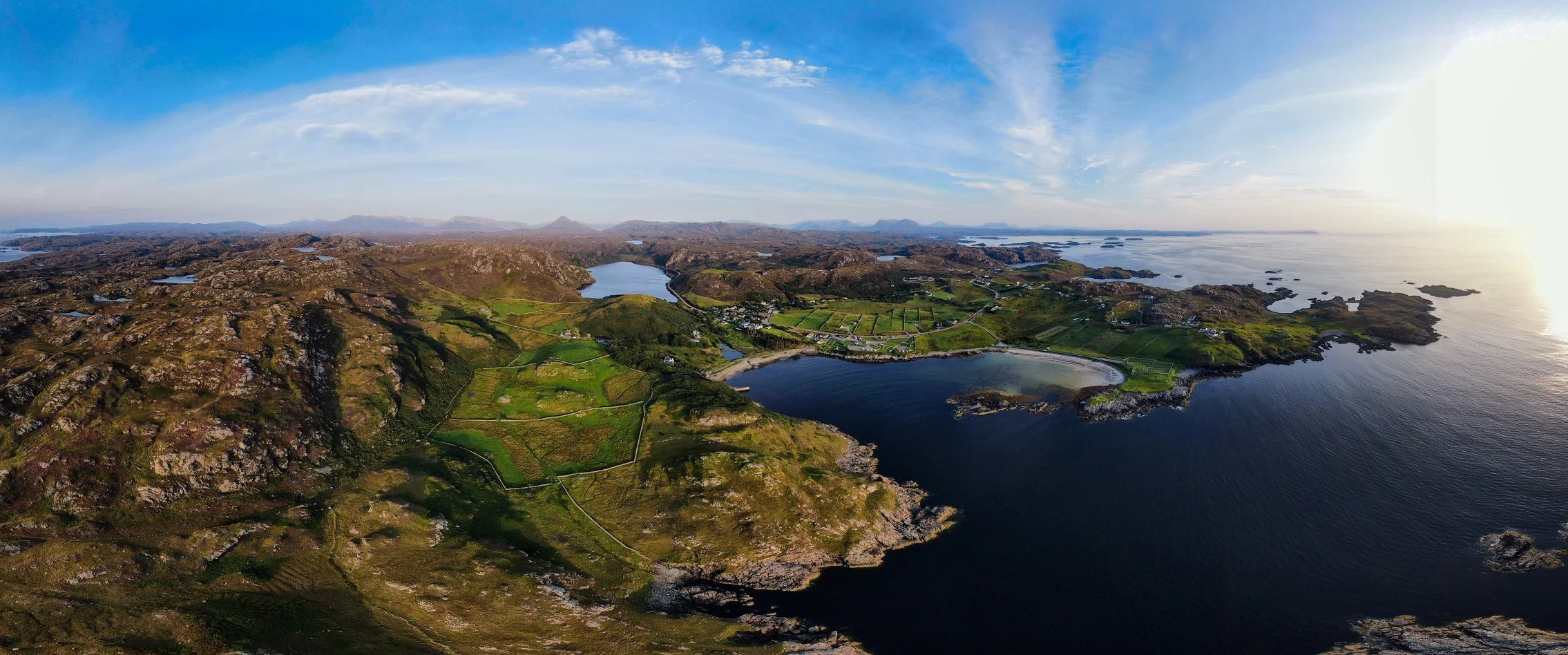
Its name is believed to come from the Old Norse “Skor-ey”, meaning "notched island," a reference to the surrounding coastline and offshore formations. Historically, the village was part of the vast Mackay estate, and later became a site of agricultural reform, with the construction of the distinctive Scourie Lodge and its walled garden in the 19th century.
Despite its small population, Scourie has played a quiet but steady role in the region’s development — balancing land stewardship, tradition, and resilience amid economic and geographic challenges. Today, much of the surrounding area remains in crofting tenure, with a strong sense of community identity.

Mackay Country
Scourie is historically part of Mackay Country — the territory once held by Clan Mackay, one of the most prominent and independent clans in the far north of Scotland. Mackay Country spans much of northwest Sutherland and is rich with stories of land struggle, emigration, and cultural endurance.
Visitors and descendants of the clan can explore the landscape once inhabited by their ancestors, including walking routes, ruined settlements, and historical sites throughout the region. Learn more about Mackay Country on their dedicated website linked below.
Genealogy & Graveyard Information
For those researching family history or tracing local ancestry, Scourie Graveyard provides a valuable historical record of generations past. The graveyard includes a range of 19th and 20th-century headstones, many belonging to long-standing village families and crofters from the surrounding area.
Local volunteers and historical groups have documented many of the inscriptions, and visitors are welcome to explore the site respectfully.
If you're conducting genealogical research, we recommend starting with:
Highland Archive Centre (Inverness)
Scotland's People online records
Local family history groups in Sutherland
Scourie Rocks Archive Presentation
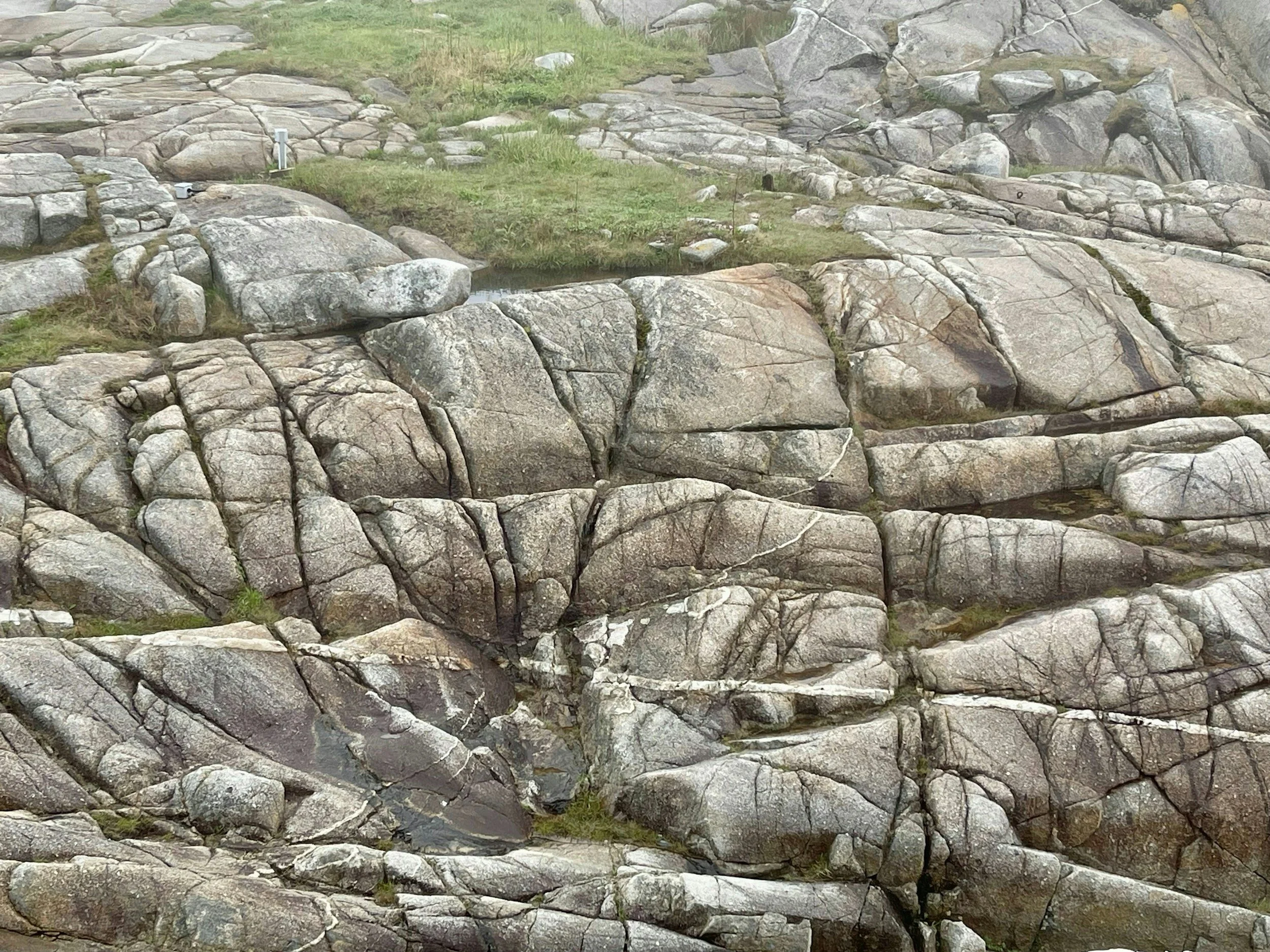
The Scourie Rocks initiative began as a community-led exploration of the area’s unique geology and cultural heritage. As part of this project, an educational presentation was developed to share the significance of the landscape with residents, visitors, and school groups.
The presentation highlights:
The region's connection to the North West Highlands Geopark
The importance of Lewisian Gneiss, some of the oldest rock in Europe
The community’s relationship with the land over millennia
View archived Scourie Rocks presentations here.
History of Handa
Until the mid-19th century, Handa Island supported a surprisingly large population relative to its size. According to the 1841 census, 63 people called the island home. In a unique tradition, the oldest widow on the island held the honorary title of "Queen of Handa."
However, the devastating potato famine of 1848 prompted the island's inhabitants to emigrate to Canada, leaving Handa permanently uninhabited. Today, the island stands as a rugged, dramatic landscape—rising over 400 feet above sea level and stretching roughly one mile by one and a half miles.
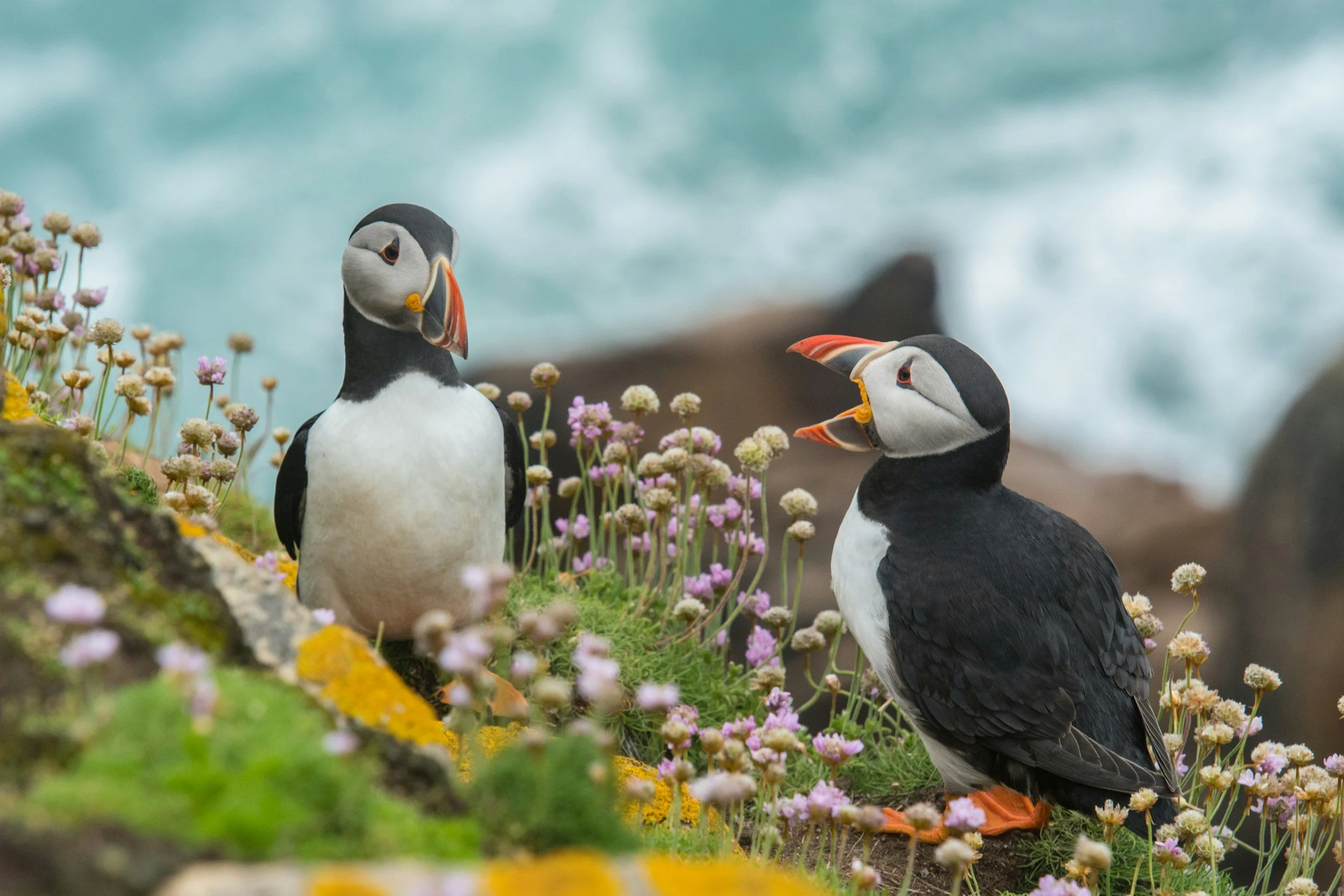
Now designated as a Site of Special Scientific Interest, Handa is managed as a nature reserve by the Scottish Wildlife Trust. Its cliffs and moorland are a haven for wildlife:
Birdlife: Over 150 species, including more than 100,000 resident guillemots
Plants: Over 216 recorded species
Mosses: More than 100 varieties
Historically, the islanders lived by working crofts and fishing the surrounding waters. Seabirds played a vital role in their survival—eggs and birds were a crucial food source, fulmar oil was used for lighting, and feathers were traded for essential goods. The potato famine ultimately brought an end to this way of life, as the entire population departed in search of a new beginning.